Years, Decades, or Even Centuries? The True Lifespan of Insect Taxidermy
Imagine you've come across a beautiful piece of artwork. Butterflies, vibrant and glistening in the light, rest under the glass of a shadowbox. It's a timeless piece, after all, the beauty of a butterfly never changes. Or perhaps it's something older. An elaborate bronze frame adorned with beetles and moths, an oddity that only gets more intriguing with age. But, before you make your purchase, a question lingers: How long will this actually last? Surely something so delicate must fade or fall apart with time. Can a real specimen last without degrading? Is the vintage piece truly antique, or simply 'vintage-inspired' and not terribly old? These questions matter even more if the piece is particularly expensive, or if you plan to gift it to a loved one. Today, we'll explore the longevity of insect taxidermy, and how to ensure your piece withstands the test of time.
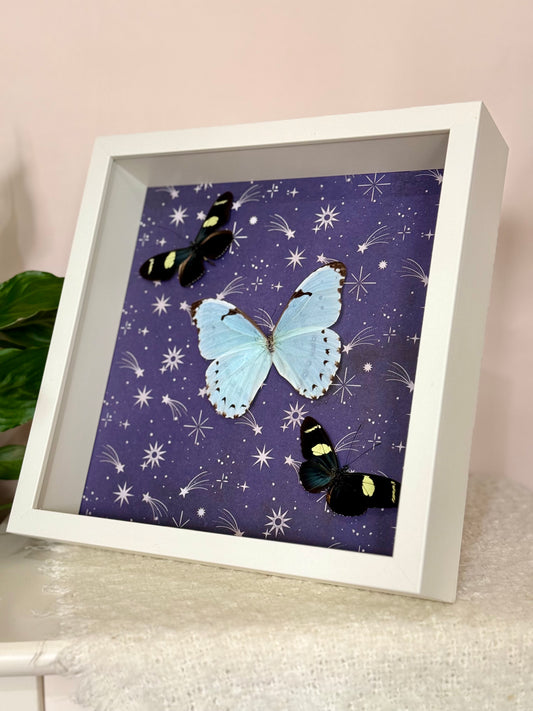
 The Blue Morpho butterfly adds elegance and natural beauty to any space
Insect taxidermy is fragile and can deteriorate very quickly if not cared for properly. Once a specimen has sustained damage, it is often unrepairable. But it's not all doom and gloom! When cared for correctly, insect taxidermy can last an astonishingly long time; even centuries. The oldest butterfly still on display was pinned over 300 years ago, and can be seen today at the Oxford University Museum of Natural History. Collected in 1702, William Vernon pinned the Bath White butterfly with techniques remarkably similar to those still used today. Many vintage pieces available online are between 50 and 80 years old and even prior to modern pinning methods, insects were successfully preserved. Scarab beetles discovered mummified in Egyptian tombs have been dated to around 4,500 years old! So how is this possible?
The answer lies in exoskeletons. Insects are equipped with an exoskeleton, that provides a protective covering and structural support for their internal organs, essentially replacing an internal skeleton, with the added benefit of being great armour. It's this exoskeleton that is preserved in insect taxidermy. Made primarily of highly durable chitin, it is functionally similar to keratin in a human body, the substance that makes us our hair and nails. Once preserved, an insect's exoskeleton can stay intact and lifelike in both colour and form for many years.
 The Sacred Scarab beetle (Scarabaeus sacer); the species most commonly found mummified in Egyptian tombs - Photo by U.Schmidt, 2016
While great longevity is possible, there are plenty of threats to insect taxidermy that could prevent it from lasting even months. Humidity, pests, sunlight, and mould all pose significant risks to preserved insects. Humidity can cause specimens to warp and become disfigured, losing their pinned shape. The sun's strong UV rays cause bleaching to the insects' wings and exoskeleton, making them lose their wonderful colours and become dull. Pests present another serious threat, with multiple species capable of decimating preserved insects and leaving nothing but dust in their wake. Mould, too, can grow in and around the insect, spoiling it, and often the frame it's housed in too. The 300 year old Bath White butterfly mentioned earlier is deliberately kept in a temperature and humidity controlled environment, and is rarely handled or removed from its display. But what if you don't have a temperature and humidity controlled room? Your insect taxidermy can still last, and we'll explain how.
The rigorous methods used by museums to keep insects preserved aren't strictly necessary for a private insect taxidermy collection. While the threats mentioned above certainly apply, they can be easily managed with a few preventative measures. Managing humidity can be as straightforward as hanging your taxidermy in a dry part of the home, away from heat sources. Think living room wall art rather than interesting bathroom décor. A physical barrier, such as a frame with an acrylic front, goes a long way in protecting your insects. Not only does it shield their fragile bodies and wings, but it also blocks sunlight, moisture and larger pests. That said, it's still advisable to keep specimens out of direct sunlight, as no one wants a faded butterfly! The method by which the insect is preserved is also crucial to its longevity. Some specimens require gutting, otherwise the soft internal tissue will rot. Specimens must also be mounted on an acid free backing to prevent yellowing and deterioration. For this reason, sourcing framed insect specimens from a reputable store is essential to ensure your piece lasts. Regular inspection of your insect taxidermy collection is equally important, so any pests or unfavourable conditions can be quickly identified and corrected.
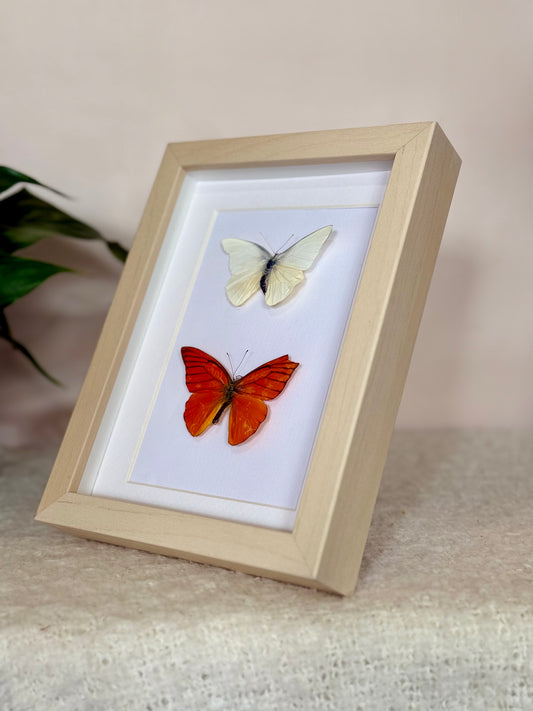
 Beautiful specimens, providing everlasting wonder
So the next time you look at a beautiful insect frame and wonder, "Will it last?" the answer is yes; potentially for a very long time! From historic entomologists and ancient Egyptians, to artisans of the present day, preserved insects have been thoughtfully prepared and displayed for generations to enjoy. With the right care, your framed insect can light up your space for many years to come, an heirloom in its own right, and something you’ll treasure, display, and return to again and again.